
Loading...
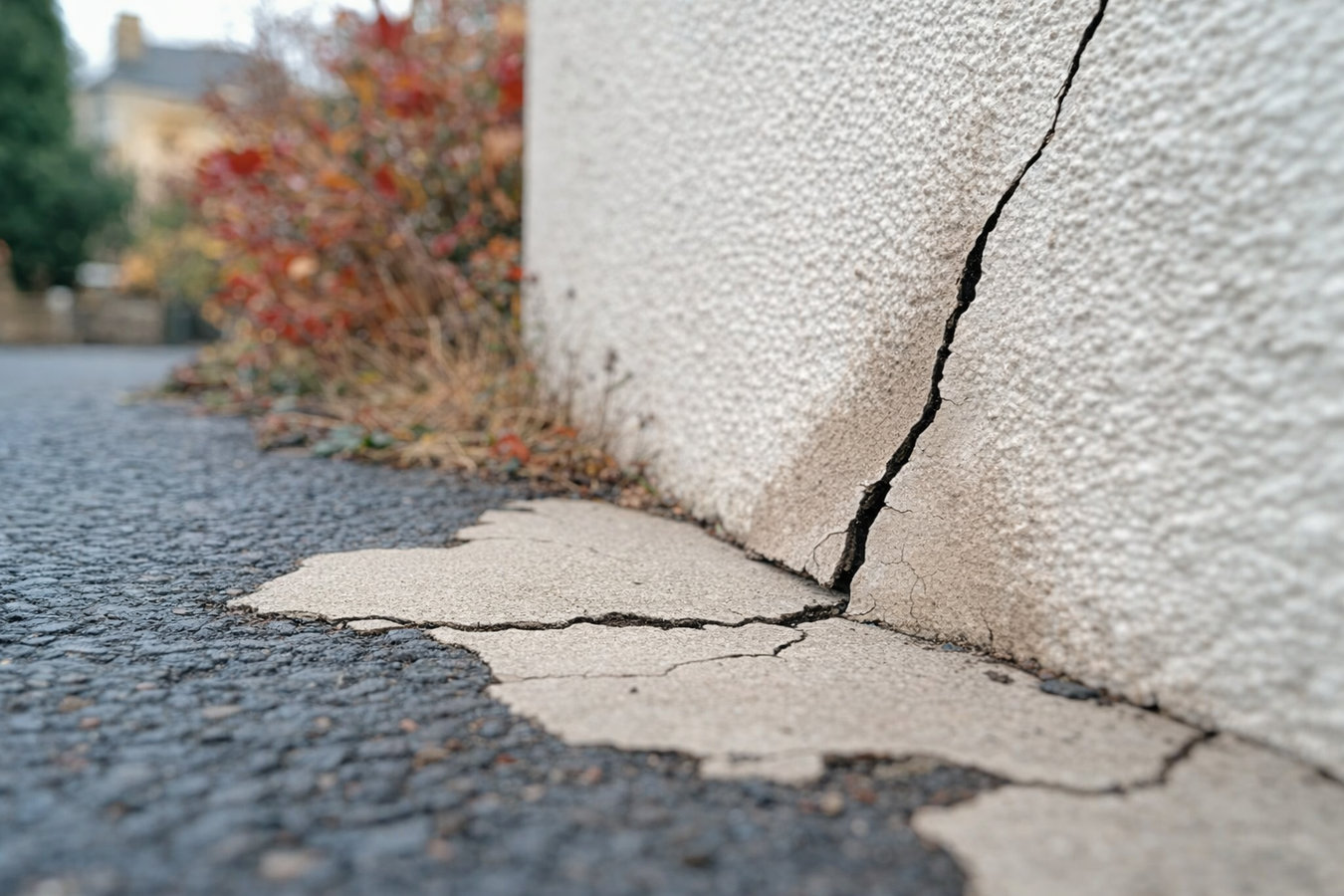
Sinking slab, sticking doors, or sloping floors? We raise and level foundations in Cupertino with clay-soil expertise, proper permits, and results you can walk on the same day.
Sinking slab, sticking doors, or sloping floors? We raise and level foundations in Cupertino with clay-soil expertise, proper permits, and results you can walk on the same day.
Foundation raising in Cupertino lifts a sunken or uneven concrete slab back to its original level position by drilling small holes and pumping material underneath to fill voids and push the concrete back up - most residential jobs take one to two days, and you can walk on the repaired surface within hours of completion.
If you are noticing sticking doors, sloping floors, or cracks appearing near window and door corners, your foundation may have shifted - a common result of Cupertino's clay soils expanding and contracting through wet and dry seasons. Foundation raising makes sense when the concrete slab itself is still structurally sound but has moved out of position.
In some cases, more extensive work may be needed. We also handle slab foundation building for situations where a slab is too far gone to raise - and we will always tell you honestly which path fits your situation before recommending anything.
If interior doors that used to swing freely now drag on the floor or refuse to latch, your home's frame may be responding to foundation movement beneath it. In Cupertino, this symptom often appears after a dry summer followed by the first heavy fall rains - the clay soil swells and contracts, and the foundation moves with it.
Diagonal cracks in drywall or plaster - especially ones that radiate from the corners of door frames or windows - are a classic sign of differential settling. One part of the foundation has moved more than another, and the walls are showing the stress. These tend to be wider at one end and may grow over time.
Walk slowly across your living room or kitchen in socks. If you can feel a slope or a soft spot, or if a marble placed on the floor rolls consistently toward one wall, your slab may have settled unevenly. In Cupertino's clay soil environment, this kind of gradual slope is common in homes that were not fully graded before construction.
Cupertino's wet winters can send water toward your foundation if the grading around your home is not directing it away. Standing water near the base of your home softens the soil and accelerates settling. Puddles forming against your foundation wall or in your crawl space after a storm are a warning sign worth acting on before the settling gets worse.
The two main lifting methods are mudjacking - which pumps a cement-and-soil slurry under the slab - and polyurethane foam lifting, which uses an expanding foam injected through smaller holes and cures faster. Both can restore a settled slab to level position. We assess your specific slab, soil type, and the degree of settling before recommending one over the other - the right method depends on your situation, not a preference for one product.
For many Cupertino homeowners, the lift alone is not the complete solution. We also offer drainage correction and regrading to address the water routing issues that caused the settling in the first place. If the underlying soil problem is not managed after the repair, the slab can sink again. We also handle concrete cutting when sections need to be removed as part of the process.
A proven method for residential slabs - a cement-and-soil slurry is pumped under the concrete to fill voids and lift the surface back to level.
A newer approach using expanding foam injected through smaller holes - cures quickly and is well suited for lighter slabs and time-sensitive jobs.
Regrading and drainage work done alongside the lift to address the water or soil issue that caused the settling in the first place.
For homes where multiple sections have shifted - a full perimeter assessment and lift that brings the entire foundation back to a consistent level.
Much of Cupertino sits on clay-heavy soils that swell when wet and shrink when dry - a constant cycle that is one of the most common reasons foundations shift in this area. It is not a sign that something was built wrong; it is simply what the ground does here. Add in the seismic activity from the nearby Hayward and San Andreas fault systems, and foundations in this area face more stress than in most parts of the country. Many homes in Cupertino were also built between the 1950s and 1980s, which means foundations that are 40 to 70 years old have been through decades of soil movement, root intrusion, and moisture cycling.
Mature trees - oaks, redwoods, and ornamental plantings common throughout Cupertino neighborhoods - are another frequently overlooked cause of foundation movement. Roots draw moisture unevenly from the soil and can physically push against slabs over time. We serve homeowners throughout the area, including Saratoga and Los Altos, where similar clay-soil and tree-root conditions apply to older residential lots.
Reach out by phone or through our contact form and we respond within 1 business day to schedule a free on-site visit. We will ask a few basic questions upfront so we come prepared with the right equipment.
We walk the property with you, assess the drainage, nearby trees, slab age, and degree of movement. You receive a written estimate - we also tell you exactly whether a Cupertino permit is required and who will handle it.
The crew drills small holes through the concrete at calculated intervals, pumps the lifting material underneath, and monitors the level throughout. Once the slab is at the correct height, the holes are patched and the surface is cleaned up.
We walk the area with you before the crew leaves and confirm the result. If a permit was pulled, we coordinate the city inspector visit and provide written documentation of the completed work.
No pressure, no obligation - we walk your property, explain what we find, and give you a written estimate. Respond within 1 business day.
(669) 205-6792Cupertino sits on expansive clay that swells when wet and shrinks when dry - one of the most common causes of foundation settling in the Santa Clara Valley. We identify whether soil movement, tree roots, or drainage is the root cause before recommending a fix.
We handle the City of Cupertino Building Division permit application, coordinate the inspector visit, and hand you the documentation when the job is closed. You never have to call the city or manage the paperwork yourself.
We work regularly on homes near the Hayward and San Andreas fault corridors and factor local seismic conditions into every assessment. A level, properly supported foundation is more resilient in an earthquake - not less.
Most foundation raising jobs in Cupertino are completed in one to two days, and you can walk on the repaired surface within hours of the work being done. We give you a clear timeline before we start so there are no surprises.
Every foundation raising job we take in Cupertino is backed by a current California contractor license - verifiable in minutes at the California Contractors State License Board. That license, combined with our Cupertino permit process and soil-specific repair approach, means the work is documented correctly and built to hold up to the same conditions that caused the problem in the first place.
Precise diamond-blade cutting for slab removal, utility access, or control joint installation - the right preparation step for many foundation repair projects.
Learn moreWhen a slab is too far gone to raise, we design and pour a replacement - engineered for Cupertino clay soils and current seismic standards.
Learn moreCupertino's wet winters put real pressure on shifting foundations - locking in your repair date now means you are protected before the first storms arrive. Call or get a free estimate today.