
Loading...
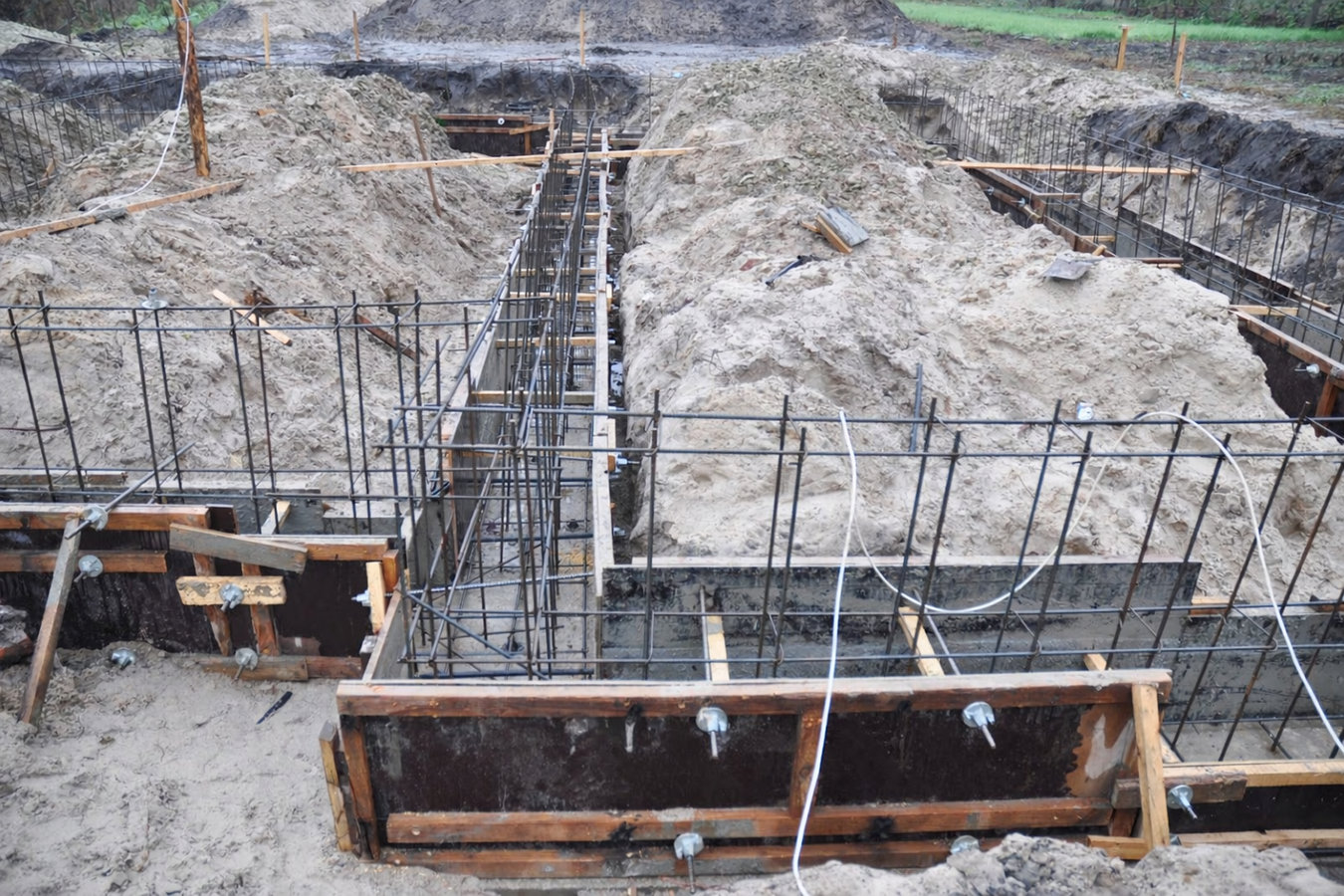
Building a deck, ADU, room addition, or retaining wall? We pour concrete footings in Cupertino sized for local clay soil and seismic conditions, with permits handled start to finish.
Building a deck, ADU, room addition, or retaining wall? We pour concrete footings in Cupertino sized for local clay soil and seismic conditions, with permits handled start to finish.
Concrete footings in Cupertino are the underground base that supports whatever you are building above - a deck, room addition, ADU, fence, or retaining wall - most residential footing projects take one to two weeks of active work plus the city permit review period, which typically adds one to three weeks before any digging starts.
Think of a footing as the flat base a table leg rests on. Without it, even a well-built structure has nowhere solid to anchor. In Cupertino, where the soil contains significant amounts of clay that swell in winter and shrink in summer, footings that are undersized or placed at the wrong depth can shift, tilt, or crack within a few years - long before the structure above shows any obvious problems.
If your project involves a larger structure, we also handle full foundation installation for cases where individual footings are not enough. The right scope depends on what you are building, and we will tell you plainly which approach your project needs.
If a structure that used to sit level is now visibly tilting or separating from the house, the footing underneath it has likely shifted or failed. In Cupertino, this often happens because the clay-heavy soil has swelled and contracted over many wet and dry seasons, gradually pushing the footing out of position. A leaning structure is not a cosmetic issue - it is a safety hazard, especially for decks that carry weight.
Cracks that run at a 45-degree angle from the corners of window or door frames are a classic sign that a nearby footing has moved. In older Cupertino homes built in the 1960s and 1970s, the original footings may not have been designed for the expansive soils common in this area. If you are seeing these cracks and they are getting wider over time, it is worth having a concrete contractor take a look.
Any new structure attached to your home - or a freestanding one like a large pergola or retaining wall - will need new footings before construction can begin. In Cupertino, where ADU additions are extremely popular right now, this is one of the most common reasons homeowners call a concrete contractor. Getting the footings right at the start is far less expensive than fixing a structural problem after the addition is built.
If your retaining wall is starting to lean forward, crack horizontally, or show gaps at the top, the footing at its base may have shifted or been undersized from the start. Many Cupertino properties near the foothills have retaining walls, and a failing wall can release a significant amount of soil quickly. This is not something to watch and wait on.
Our footing work covers the full range of residential and small commercial applications - from isolated pier footings for decks to continuous strip footings for room additions and ADUs. For properties where a structure has already shifted, we coordinate footing work with foundation raising so the structure is brought back to level before the new footing anchors it in place.
Every footing project starts with a soil assessment. The depth and width of a footing are not arbitrary - they are calculated based on the load above and the capacity of the soil below. In Cupertino, that assessment almost always factors in clay content and seasonal moisture movement. We do not finalize a design until we know what we are working with on your specific lot.
Isolated pier or continuous footings sized for the load above, designed for Cupertino's clay soil and seismic zone requirements.
Full foundation footings for accessory dwelling units and room additions, coordinated with the city's ADU permit process from the start.
Base footings for retaining walls on sloped Cupertino lots, designed to hold back soil load even after wet-season saturation.
Assessment of existing footings that are showing movement, cracking, or settlement - with repair or replacement recommendations grounded in what we find.
Cupertino's housing stock is dominated by homes built between the 1950s and 1980s, and a large share of the footing work we do here involves structures whose original footings were never designed for the soil conditions we now understand much better. The city's clay-heavy soil - especially in neighborhoods closer to the foothills - swells dramatically after the rainy season and contracts again in summer. Footings from that era were often too shallow and too narrow for that kind of movement, and the result shows up decades later as leaning decks, cracked walls, and separating additions.
ADU construction is also one of the most active segments in Cupertino right now, and every ADU starts with footings. The City of Cupertino's Building Division reviews footing plans carefully on ADU projects - they want to see that seismic reinforcement and soil conditions have been factored in before they approve the permit. We work regularly in Cupertino and in neighboring Saratoga and Los Altos, where similar soil conditions and housing stock create the same set of footing challenges.
Reach out by phone or through our contact form. We respond within 1 business day to schedule a free site visit. Good footing work starts with seeing the actual site - we do not quote without visiting first.
We walk the property, assess the soil and access conditions, and check for underground utilities. You receive a written estimate that breaks down excavation, concrete, steel reinforcement, and cleanup - nothing lumped together.
We pull the required building permit from the City of Cupertino's Building Division and handle all communication with the city. For most residential footing projects, plan review takes one to three weeks.
The crew digs to the required depth, sets forms, and places steel reinforcement before the city inspector arrives to verify the setup. After the inspection is signed off, we pour and cure. Most footings are ready for framing within seven to ten days.
We respond within 1 business day, visit your site before quoting anything, and explain exactly what the footings need to be - no technical jargon, no pressure to commit.
(669) 205-6792Cupertino's expansive clay is the most common reason footings fail early. We assess your specific soil conditions before finalizing any footing design - not after the permit is submitted. That way the depth and width are right for your lot, not just the average lot in the city.
Cupertino sits close to the San Andreas and Calaveras faults. Every footing we pour meets California's seismic requirements for steel reinforcement and connection hardware. The city inspector checks this before the pour - we make sure it is done right the first time.
We pull the Cupertino Building Division permit and handle the inspector scheduling on your behalf. You get documented, inspected work that protects your investment and will not create complications during a future home sale. Unpermitted footing work is one of the most common deal-killers in Cupertino real estate.
ADU additions are one of the most active project types in Cupertino right now. We have completed footing work for ADU projects across the city and understand the specific permit requirements the city's Building Division applies to these projects. Verify contractor licensing at cslb.ca.gov
Every footing we pour in Cupertino is assessed, permitted, inspected, and documented. That paper trail is what protects your investment when you go to sell - and it is what stands between your structure and a costly fix years down the road.
For seismic context, the California Geological Survey maps the specific earthquake hazard zones in Santa Clara County, including the areas immediately around Cupertino.
When a structure has already shifted, foundation raising brings it back to level before the footings are reinforced.
Learn moreFull foundation systems for new structures - the next step up from individual footings for larger additions and ADUs.
Learn morePermit season fills quickly - contact us now to lock in your start date and get a written estimate before the inspection backlog builds.