Loading...
Building a new home or major addition in Cupertino? We install concrete foundations engineered for local clay soil, seismic requirements, and city permit approval.
Building a new home or major addition in Cupertino? We install concrete foundations engineered for local clay soil, seismic requirements, and city permit approval.
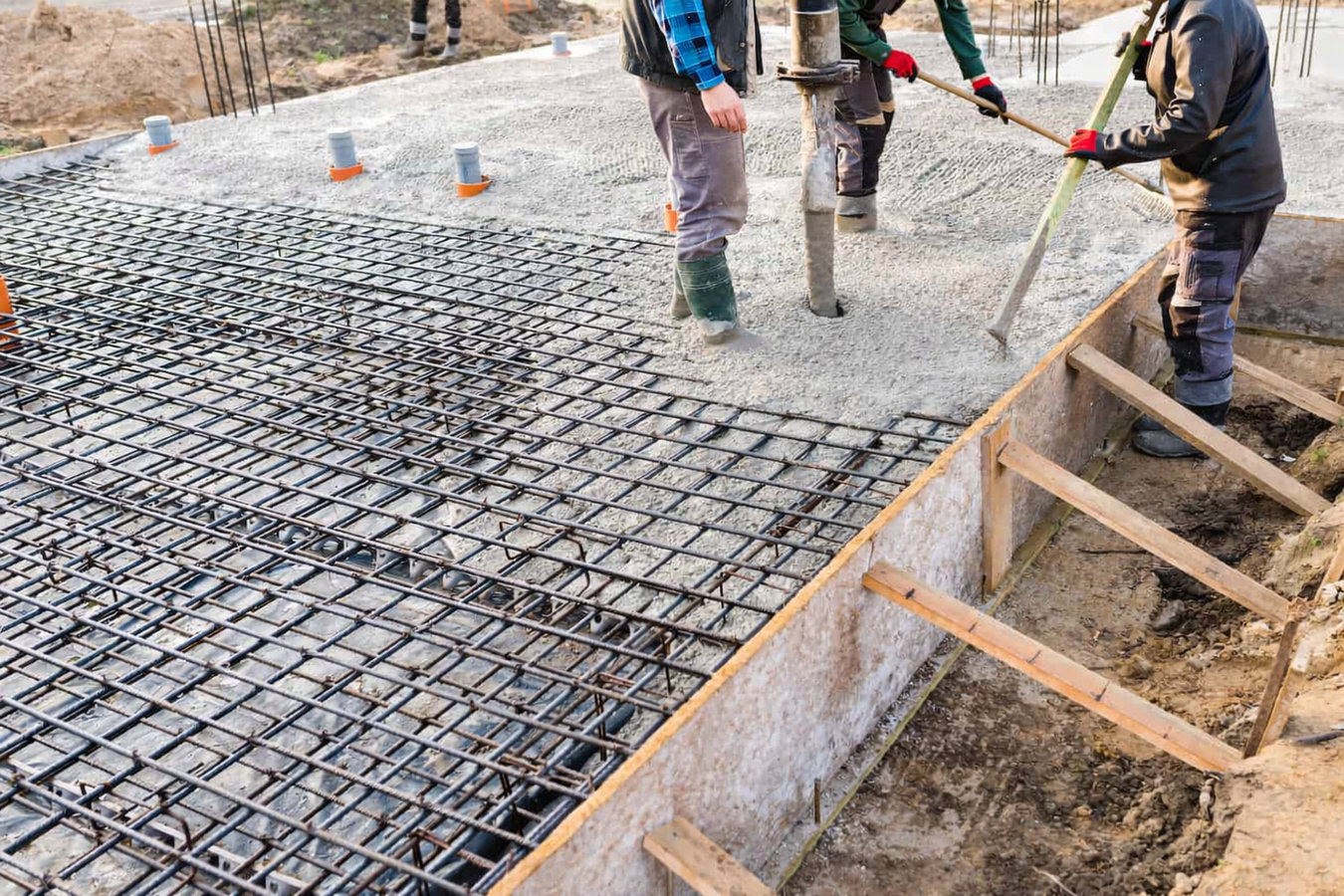
Foundation installation in Cupertino covers the full process of building the concrete base your home or addition will sit on - from excavation and soil prep to steel placement, the concrete pour, and the city inspections required at each stage - most residential projects take one to three weeks of active work once the permit is approved.
If you are building a new home, replacing an older raised foundation, or adding significant square footage to an existing structure, the foundation is the most consequential structural decision in the entire project. In Cupertino, that decision is shaped by two factors above almost everything else: clay soils that move with the seasons and seismic requirements that apply because of the city's proximity to active fault systems.
For projects that involve a single structure on a flat lot - ADUs, detached garages, workshops - our slab foundation building service is often the right starting point, with the same permits, engineering review, and local soil knowledge applied to a simpler scope.
If doors or windows have started sticking, dragging, or no longer latch the way they used to, the frame of your house may be shifting. This kind of movement often starts at the foundation. In Cupertino, where clay soils expand and contract with the seasons, this symptom can appear gradually over several years before it becomes obvious.
Small hairline cracks in drywall are common and usually harmless. But cracks that run diagonally from the corners of windows and doors, or cracks in your concrete floor wider than a quarter-inch, can signal that the foundation is moving unevenly. After any significant Bay Area earthquake, these are worth having assessed even if they seem minor.
Many Cupertino neighborhoods were built in the 1950s and 1960s, and some original raised foundations were built before modern seismic standards existed. If your home sits on a raised foundation and has never had a structural evaluation, it may not have the reinforcement needed to perform safely in a major earthquake. This is a timeline-based risk, not a visible symptom.
Standing water, a musty smell, or damp patches along the base of interior walls can mean water is getting under or around your foundation. In Cupertino, winter rains can saturate clay soil quickly, and if drainage is not directing water away from your home effectively, it can work its way into the foundation over time.
Our foundation installation work covers new homes on vacant lots, foundations for major additions, raised perimeter foundations, and full replacements for structures whose existing foundation has failed. Every project includes engineering review, the city permit application, and all required inspections - not as optional add-ons, but as core parts of what the job is. We also work alongside projects that include concrete parking lot building for multi-unit or commercial properties where foundation and site work need to be coordinated.
Cupertino's housing stock is largely made up of homes built between 1950 and 1980. Many of those homes have raised perimeter foundations that were designed before California adopted modern seismic standards. If your home is in that age range and the foundation has never been evaluated or retrofitted, that is worth knowing about before you begin any major renovation work - because it affects how the addition or remodel is connected to the existing structure.
Full installation for new construction on vacant lots or after teardown - engineered for Cupertino's seismic zone and clay soil conditions.
Foundation extension or new pour for room additions, second stories, and large remodels where the existing structure needs additional structural support.
Concrete perimeter walls with a crawl space underneath - common in Cupertino homes from the 1950s and 1970s, and the right choice for sloped lots.
Full removal and replacement for foundations that have cracked, settled, or shifted beyond repair - including seismic retrofit work on older raised foundations.
Cupertino sits in one of the most seismically active regions in the United States, close to both the San Andreas and Calaveras fault systems. This proximity is not abstract - it shapes what California's building code requires for foundation design, and Cupertino's building department is known for enforcing those requirements thoroughly. The permit and inspection process adds several weeks to a foundation project timeline, but it also means a city inspector independently verifies the work at critical stages. In a market where homes sell for more than $2 million and buyers scrutinize structural documentation closely, that record matters. Homeowners in neighboring Los Altos face identical seismic requirements and similar soil conditions, and we regularly work in both cities.
The expansive clay soils throughout the Santa Clara Valley add a second layer of complexity. Clay soil swells during the wet season and shrinks during dry summers - and that movement stresses foundations year after year. A contractor who does not ask about your soil conditions or account for drainage in the foundation design is cutting a corner that typically shows up as cracking within a few years. For homeowners in Campbell and other nearby cities, the same clay soil dynamics apply. Getting the drainage detail right at the foundation stage is far less expensive than addressing soil-related cracking after the structure is built.
Reach out by phone or through our contact form. We respond within 1 business day to schedule a free on-site assessment - a real number requires seeing your lot, your soil conditions, and your plans.
We submit your permit application to the City of Cupertino Building Division and manage the review process on your behalf. Plan review for a foundation typically takes several weeks - starting early is the single best way to keep your overall schedule on track.
Once the permit is approved, we excavate to the required depth, prepare the base, and place rebar according to the engineered plans. A city inspector visits before the pour to verify the reinforcement - this step cannot be skipped.
Concrete is placed and finished, usually in a single day. We manage the curing period and schedule the city's final inspection to close the permit. You receive the signed inspection record - documentation that matters when you sell or refinance.
We respond within 1 business day. Your written estimate will cover permits, inspections, site preparation, and cleanup - not just the concrete pour.
(669) 205-6792Cupertino sits close to two major fault systems. Every foundation we install is designed and built to California's seismic requirements - the right steel, the right anchor hardware, and the engineering review to back it up. This is standard practice here, not an upsell.
The city's building department is thorough, and a foundation project requires multiple inspections and plan review. We handle every step - application, follow-up, and inspection scheduling - so your project does not stall while paperwork sorts itself out.
We work across 12 cities in the South Bay, from Cupertino to San Jose and Saratoga to Fremont. That breadth means we understand how soil conditions, permit timelines, and inspection requirements vary across this part of the Bay Area - and we apply that knowledge to your specific lot.
A permitted foundation comes with a paper trail - city records that show the work was reviewed and signed off by an independent inspector. We make sure you have that documentation in hand before we consider a project complete, because it protects your home's value in a market where buyers and lenders look closely at structural work.
Foundation work is the one part of your home where cutting corners is invisible right up until it is not. Every project we complete in Cupertino is permitted, inspected, and documented - giving you proof the work was done right. The American Concrete Institute sets the standards our crews follow for reinforcement, curing, and quality control on every pour.
Commercial and multi-unit concrete parking lots designed for Cupertino's soil conditions and traffic load requirements.
Learn morePost-tensioned slab foundations for ADUs, detached garages, and new construction - the most common foundation type for new builds in Cupertino.
Learn morePermit slots fill up fast in Cupertino - the sooner we submit your application, the sooner your project can break ground. Call or request a free estimate today.